
Waterfront Locksmith Melbourne
Professional locksmith services in Southbank
Reliable locksmith and property security services for apartments, homes, offices, businesses and commercial properties across Southbank and surrounding Melbourne areas.
Property types
Apartments, homes, offices and retail
Core work
Installation, replacement and rekeying
Based in
Southbank Boulevard, Melbourne
What does your property need?
Pick the closest description. Each one opens the detail for that service, and carries your choice straight into the quote form.
A new lock needs to be installed on a residential or commercial property.
We look at the door, the frame and how the opening is used before recommending hardware. New builds, renovated openings and doors that have never carried a lock each need different preparation.
What we do
Nine service pages, each written for the work it describes. Start wherever your property sits.
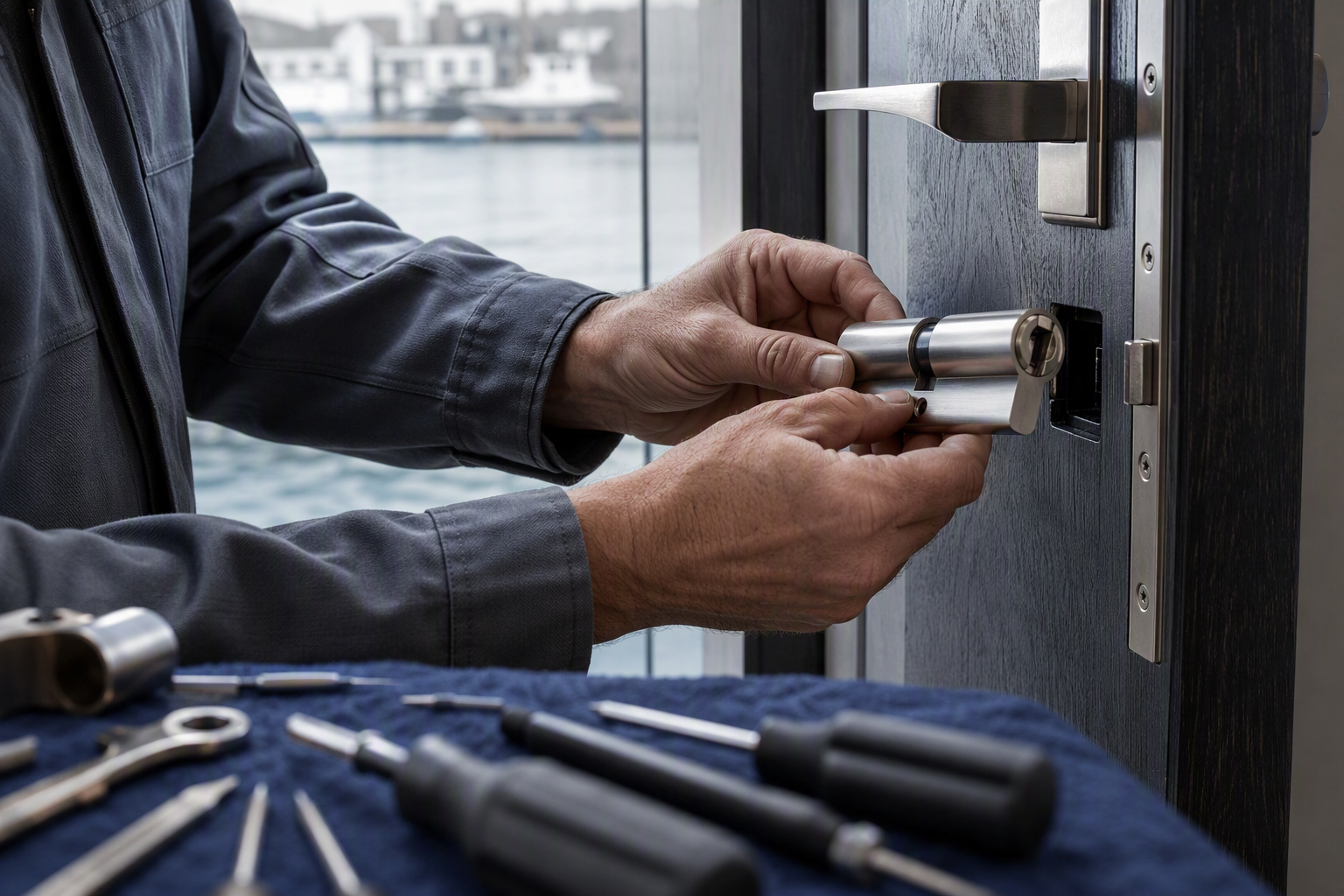
On site
Every service below starts the same way: we look at the actual door, frame and hardware before recommending anything.
Follow the access point
Every locksmith job travels the same route through a property. Step through it to see what we consider at each point — and where the boundaries of our work sit.
Stage 01 of 06
Street frontage
The path starts at the footpath. Where a vehicle can stop, whether there is a loading zone, and how far hardware has to be carried all shape how a job is scheduled — particularly along Southbank Boulevard and the surrounding riverfront streets.
Stages
- Street
- Building
- Entry
- Door
- Lock
- Room
The entry system, explained
A door is not one item. It is a stack of parts that have to work together — and this is the stack we work through on site.
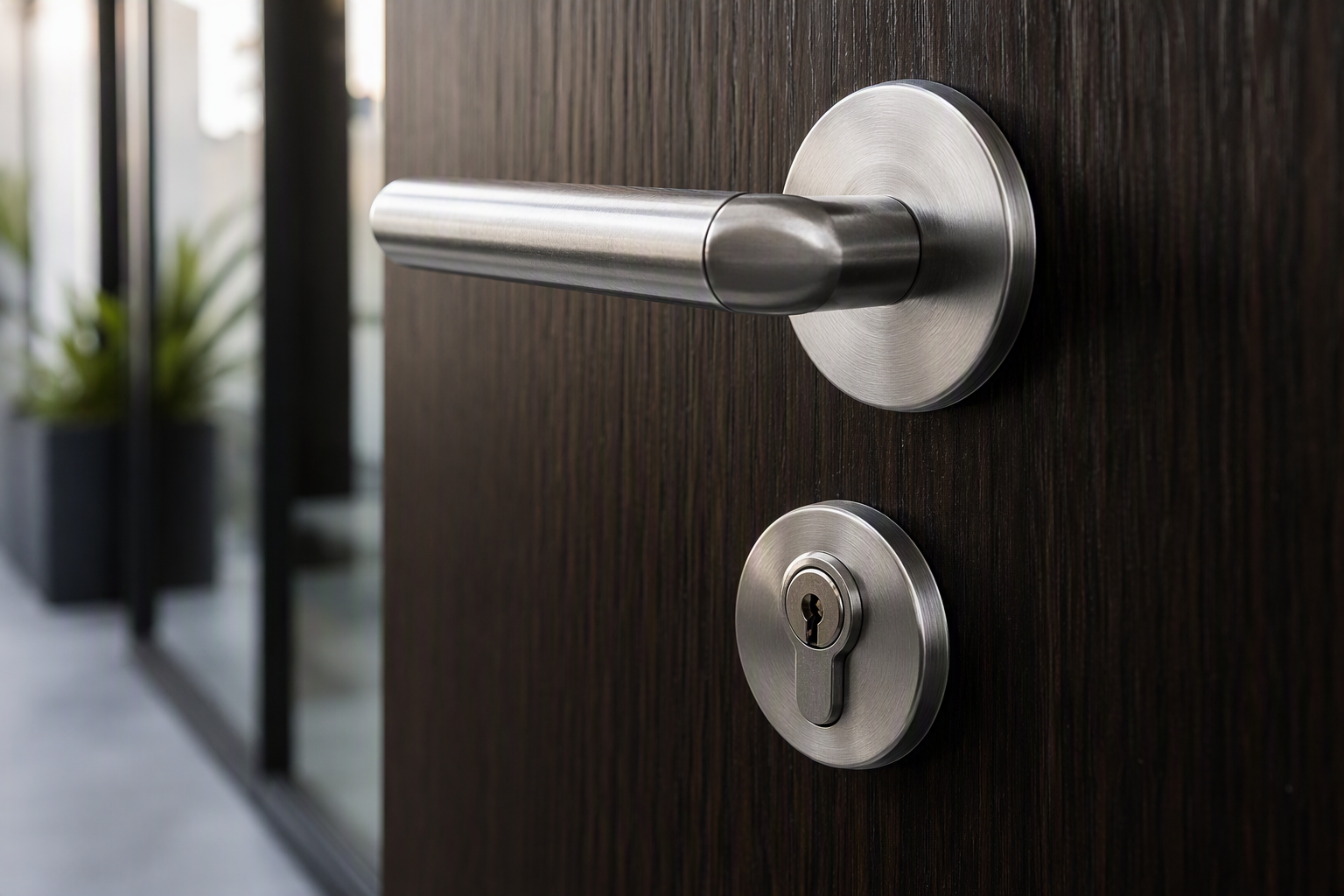
The building
The structure sets the constraints: the age of the property, how doors were originally specified, and what the builder installed. Two apartments in the same suburb can have completely different door hardware.
From first look to finished work
Four stages, in the same order every time. Nothing is fitted before you have agreed to it.
Understand
We start with the requirement rather than the product. Which property, which door, and what is actually happening at the moment.
Assess
On site we review the door, the frame and the existing hardware together, then explain the options that suit the opening and confirm the work with you.
Complete
The agreed locksmith service is carried out. If something unexpected is found in the door or frame, we stop and discuss it before continuing.
Check
We operate the lock from both sides, confirm the door closes and locks as it should, hand over any keys, and leave the area tidy.
Clear from start to finish.
No surprises, no pressure and no work fitted before you have agreed to it.
- Before the service
- The more you can tell us, the more useful our first response is. Helpful details: the property type, which door is involved, roughly how old the hardware is, what the lock or key is doing, and whether the building has access arrangements we should know about. A photo of the lock and the edge of the door is often worth several messages.
- During the service
- We look at the door, the frame and the existing hardware before recommending anything. You will be told what we think the issue is, which options are reasonable for that opening, and what each one involves. Work only proceeds once you have agreed to it.
- After the service
- We test the lock from inside and outside, check the door closes and secures correctly, explain how to operate any new hardware, hand over keys, and remove packaging and offcuts from the site. If anything still feels wrong when you use it, tell us.
When your locks need attention
None of these situations are emergencies by default. They are simply the points at which it is worth having someone look at the door.
The lock has become difficult to operate
Keys that need jiggling, handles that feel gritty, or a door you have to lean on to lock. Usually wear or alignment rather than failure.
Hardware is visibly worn
Loose handles, a cylinder that moves in the door, or finishes worn through after years of daily use on a busy entry.
A lock has been damaged
Impact, forced movement or a broken key can leave a lock that still looks intact but no longer works reliably.
You are moving into a property
You may not know how many keys exist or who has held them. A common reason to consider rekeying or replacement.
Renovation or building work
New doors, altered openings and trades coming and going often mean hardware needs to change or be reinstated afterwards.
Access requirements have changed
New tenants, new staff, a change of manager, or a key that is no longer accounted for. The right answer depends on the hardware in place.
The appropriate solution depends on the property, the hardware and the circumstances — which is why the cheapest correct answer is sometimes an adjustment rather than a new lock.
The right approach for the property
Different doors, frames, locks, buildings and access requirements can require different approaches. Four things change the answer more than anything else.
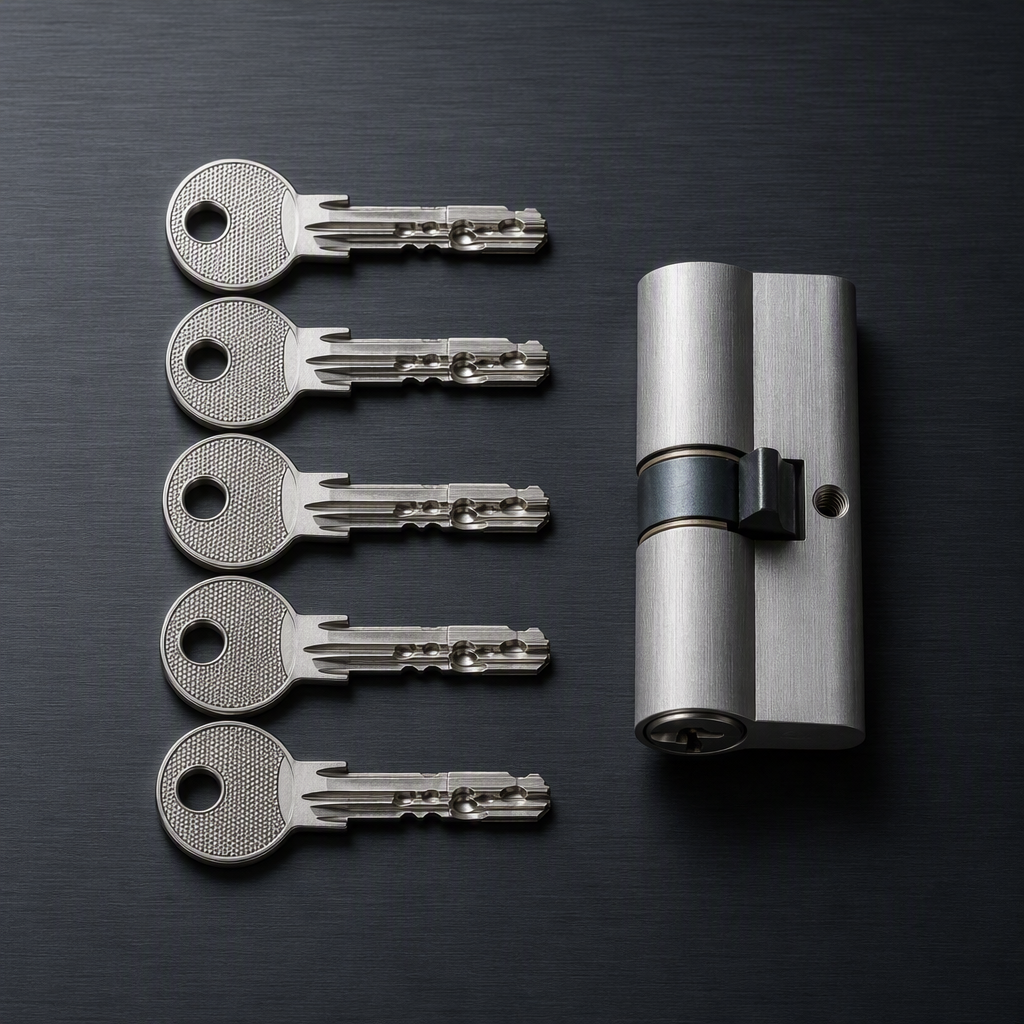
The door decides more than the lock
Timber, solid core, glazed and metal-framed doors all accept hardware differently. The same lock is not automatically right for every opening.
Existing preparation matters
Doors already cut for hardware limit what can be fitted neatly. Working with existing preparation often gives a better result than starting again.
How the opening is used
A residential entry used a few times a day and a retail door used hundreds of times have very different wear patterns.
Who needs access
One household, several tenants, or a rotating team of staff. The access requirement often determines the hardware, not the other way around.
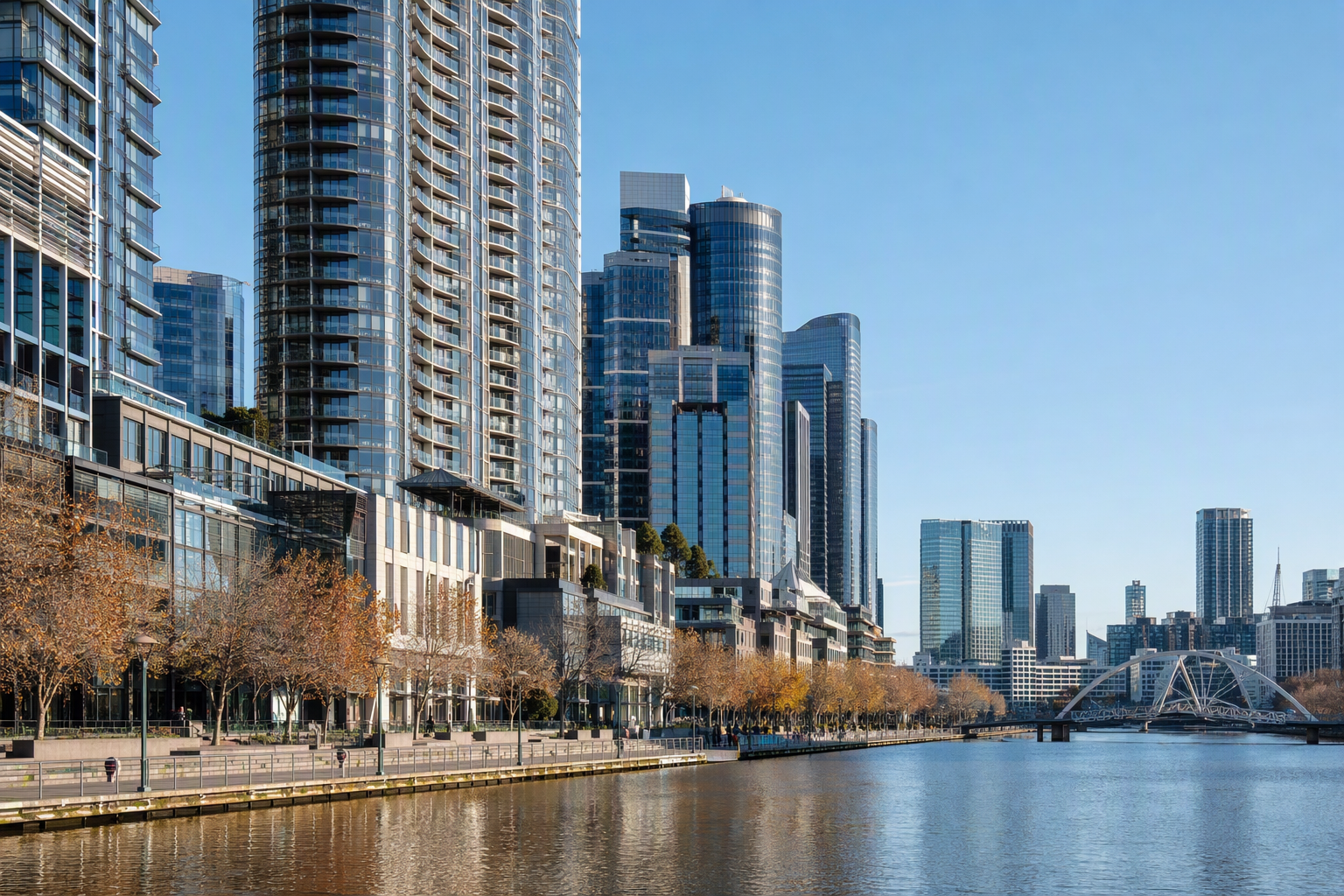
Locksmith services for Southbank’s modern property landscape
Southbank contains a substantial mix of apartments, modern residential buildings, offices, retail premises and commercial properties. Each of those has potentially different doors, locks and access configurations, sometimes within the same building.
A podium retail entry cycles hundreds of times a day. An apartment entry door two floors above it is heavier, often fire-rated and carries builder-specified hardware. A commercial tenancy between them may use glazed doors in metal frames. The same recommendation does not fit all three.
Being based on Southbank Boulevard means we see that mix constantly, and we plan work around the practical realities of it — building access, service lifts and trading hours included.
Why Southbank customers can feel confident
Five principles, all of which are things we can actually be held to. There are no awards, ratings or certifications listed on this page, because we only publish what can be supported.
- Clear communication
- You should understand what service is being recommended and why, in plain language, before any work begins.
- Careful work
- Doors, frames, floors and surrounding finishes are treated with respect, and the area is left tidy when we finish.
- Practical solutions
- The focus stays on the actual lock, door and access requirement rather than adding hardware the opening does not need.
- Thorough approach
- Completed work is reviewed and tested with you before we consider the job finished.
- Local service
- Based on Southbank Boulevard and focused on Southbank and the surrounding Melbourne areas we genuinely service.
Where we work
Southbank first, then the areas around it we genuinely reach. Each area below has its own page with local detail rather than a repeated template.
- What does a locksmith do?
- A locksmith works on the mechanical hardware of doors and openings: installing and replacing locks, adjusting hardware and alignment, rekeying cylinders where the lock supports it, and diagnosing why a lock or door is no longer operating correctly.
- When should I replace a lock?
- When the mechanism is worn to the point that it no longer operates reliably, when it has been damaged in a way that affects how it secures the door, or when the hardware is not suited to how the opening is now used. Many other symptoms are resolved by adjustment or rekeying instead.
- What is the difference between rekeying and replacing a lock?
- Rekeying keeps the existing lock in the door and changes which key operates it, so previously issued keys no longer work. Replacement removes the lock and fits new hardware. Rekeying is a key decision; replacement is a hardware decision.
On Southbank Boulevard
We are based in the suburb we service most. The address below opens directly in Google Maps.
- Phone
- +61-3-4823-4211
- [email protected]
- Hours
- Open 7 days, 8:00am – 7:00pm
Ready to secure your property’s entry?
Tell us about your property, lock or access requirement and we’ll help you understand the appropriate next step.
Serving Southbank and surrounding Melbourne areas